Air Spade Tree Root Services in Georgia
Expose, inspect and treat tree roots with compressed air, not blades. Fix compacted red clay, girdling roots and construction damage without harming the tree.
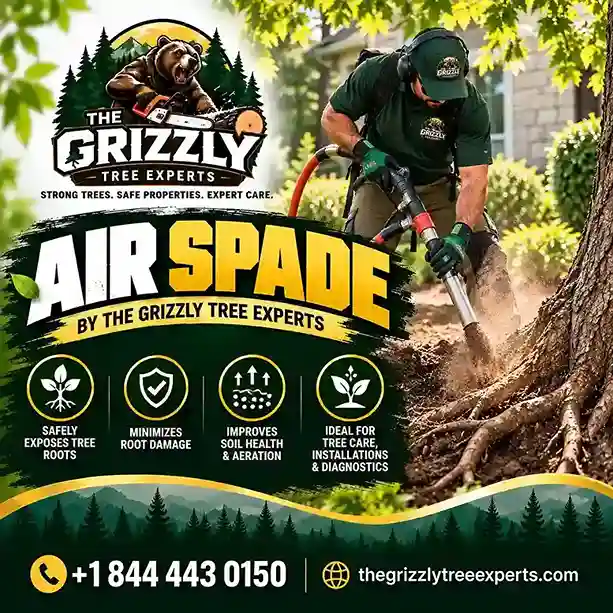
What is an air spade?
Root Excavation That Leaves the Roots Alone
An air spade is a handheld tool that fires a fast stream of compressed air into the ground. The air breaks up soil and carries it away, while roots, bark and buried lines stay untouched. It lets an arborist see what is really going on under your tree.
At GA Tree Service leader Grizzly Tree Experts, air spade work is part of our tree health inspection and root care programs. It is the safest way to diagnose root problems, and often the only way to fix them without removing the tree.
Because Georgia soil is so hard on roots, this is one of our most requested specialty services across metro Atlanta, the Cherokee, Cobb, Fulton and Forsyth county area, and the Savannah coast.
What we use air spade work for
- Root collar excavation to restore the root flare
- Finding and correcting girdling or circling roots
- Relieving compacted clay and improving soil oxygen
- Root inspections for decay, rot and structural risk
- Pre-construction root mapping and protection
- Safe soil amendment and deep fertilization
- Exposing buried utilities near trees
Local conditions
Georgia Soil and Weather Problems We Fix
Compacted Red Clay
Georgia clay packs down hard, starves roots of oxygen and sheds water instead of absorbing it. Air excavation loosens the root zone, and amendments can be worked in without cutting a single root.
Infill and New-Build Damage
Grading, trenching and heavy equipment around Atlanta, Alpharetta, Cumming, Canton and Woodstock neighborhoods compact soil and sever roots. We map roots first so builders can plan around them.
Buried Root Flares
Fill dirt, deep mulch piles and landscaping grade changes bury the root collar and invite rot. We excavate to the true flare, a common fix in Marietta, Roswell and Decatur yards.
Storm and Saturated Soil
Heavy Georgia rain, tornado-season storms and tropical systems loosen root plates and hide damage. An air spade inspection shows whether a tree is stable before the next storm. See our storm prep support systems.
Coastal Live Oaks and Sandy Soil
In Savannah, Pooler and Port Wentworth, live oaks and water oaks deal with high water tables, pavement and sidewalk pressure. Air excavation protects heritage roots during repairs.
Root Rot and Decline
Yellowing leaves, thinning crowns and dieback are often root problems. Exposing the roots shows rot, girdling and fungal issues that a canopy inspection alone misses.
Why air, not steel
Air Spade vs. Traditional Digging
| Factor | Air Spade | Shovel / Excavator |
|---|---|---|
| Root damage | Roots and bark stay intact | Roots are often cut, torn or crushed |
| Feeder roots | Preserved | Frequently lost |
| Buried utilities | Exposed without harm | Risk of strikes |
| Diagnosis | Full root view for accurate assessment | Limited, guesswork |
| Tree recovery | Faster, lower stress | Higher decline and decay risk |
How it works
Our Air Spade Process
Free On-Site Assessment
A certified arborist checks the canopy, trunk base and soil, then explains whether air excavation is the right fix.
Utility and Site Prep
We mark the work area, protect lawns and hardscape, and plan the soil staging so your yard stays clean.
Air Excavation
Compressed air removes soil in controlled passes, exposing the root collar and structural roots without cutting them.
Treatment
We correct girdling roots, relieve compaction, add amendments or take inspection notes, based on what the roots show.
Backfill, Cleanup and Report
We backfill with proper soil at the correct grade, haul debris, and walk you through findings and aftercare.
Pair it with
Related Tree Care Services
Air spade work often leads to other care. Combine it with a tree trimming and pruning plan, cabling and bracing for weak structure, or emergency tree removal if roots show a tree is failing. Building or developing? See lot and land clearing and commercial tree service. Browse all our tree services.
 Tree Health Inspection
 Tree & Shrub Fertilization
 Cabling & Bracing
 Storm Prep Support
 Lot & Land Clearing
 Stump Grinding
Air spade service areas
Common questions
Air Spade FAQs
Protect Your Trees From the Roots Up
Talk to a certified arborist about air spade root care for your Georgia property. Learn more about us at GA Tree Service home, or call now for a free estimate.
(844) 443-0150Get a Free Estimate